Key Takeaways
- Targeted data from public records offers a significantly higher ROI than generic lead marketplaces
- Code violations provide a clear signal of immediate property repair needs for specialized contractors
- Direct outreach through mail and canvassing remains a dominant strategy for Spring 2026 business growth
- Diversifying away from shared lead platforms reduces cost per acquisition and increases profit margins
In the competitive landscape of Spring 2026, finding consistent contractor leads is the primary challenge for growing home service enterprises. As digital advertising costs continue to climb, business owners are seeking more efficient ways to fill their sales funnels with high-intent prospects. According to U.S. Census Bureau housing data, the demand for structural renovations remains robust, yet the method of reaching these customers has evolved significantly.
Relying solely on traditional marketing channels often results in low-margin work and high competition. To maintain a competitive advantage in 2026, firms are turning toward data-driven strategies that identify property owners with immediate, verifiable needs. This transition from passive waiting to proactive targeting is the hallmark of modern contractor lead generation.
The 2026 Market Landscape for Service Providers
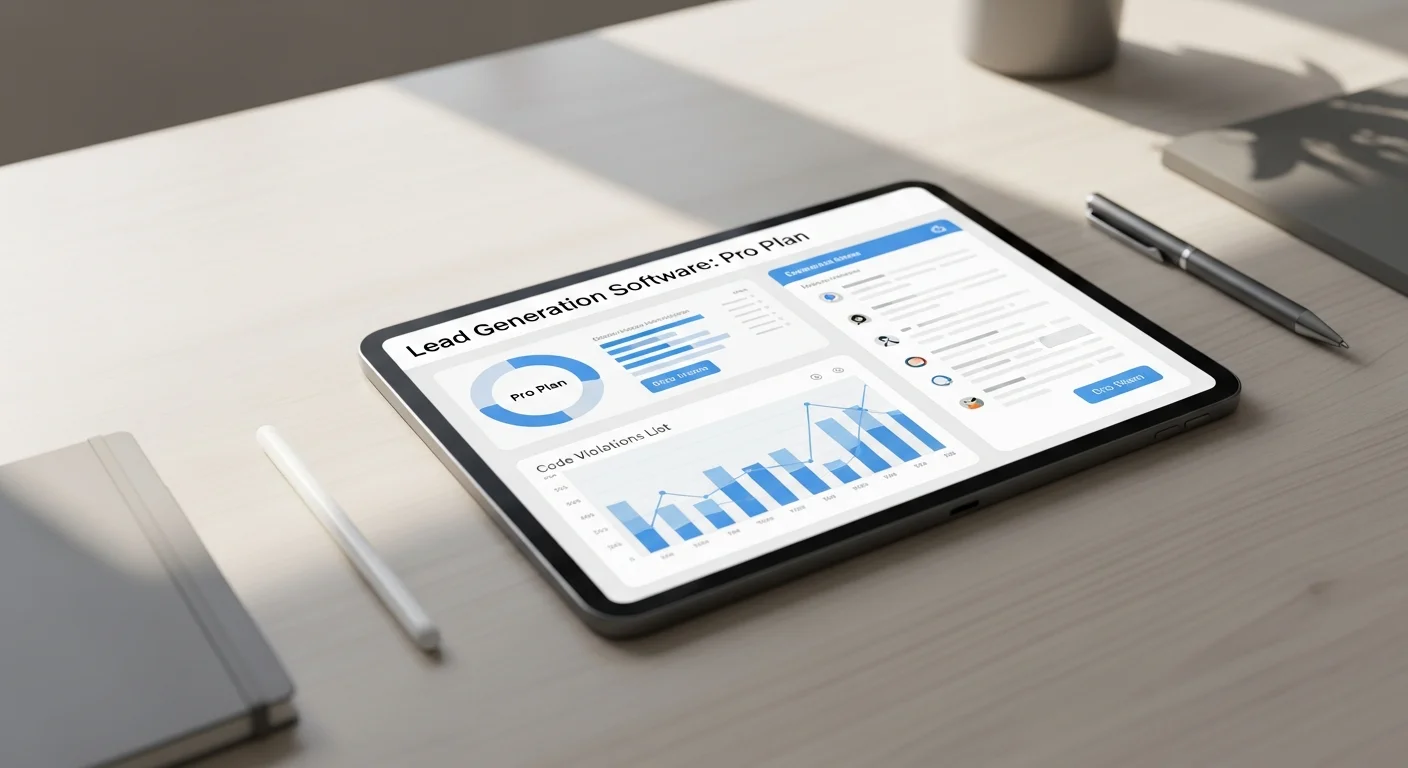
Pro Plan
Buy NowThe Shift Toward Proprietary Data
In the current fiscal year, lead quality has surpassed lead quantity as the most critical metric for procurement managers. Generic digital leads often suffer from high "noise" ratios, where the prospect is merely researching rather than ready to buy. By focusing on building code violations by address, companies can pinpoint properties where work is not just desired, but legally required.
Operational Efficiency and Fleet Optimization
Efficient scheduling and route density are vital for maintaining high throughput in 2026. When sales teams utilize a targeted code violations list, they can cluster their outreach efforts geographically. This reduces fuel costs and increases the number of face-to-face consultations each representative can perform in a single day.
Ready to bypass the competition with exclusive, address-level data?
Get Daily Violation Leads Now →How to Acquire Quality Contractor Leads via Public Records
Accessing Municipal Data Streams
Most municipalities maintain records of structural deficiencies and safety concerns. Navigating code violations public records allows businesses to find homeowners who have been officially notified of issues like roof degradation, electrical hazards, or HVAC failures. This data provides a built-in sense of urgency for the prospect.
Filtering for Commercial Opportunities
For larger firms, public records can be filtered to show multi-family units or industrial sites with open violations. These large-scale projects offer significantly higher total contract values and better payback periods for the marketing investment required to secure them.
Leveraging a Code Violations List for Direct Sales
The Power of Direct Mail Personalization
Direct mail remains one of the most effective ways to utilize contractor leads in 2026. By mentioning the specific nature of a violation, a personalized letter demonstrates that your company is already aware of the problem and has the professional capacity to solve it immediately.
Door Knocking and Canvassing Best Practices
Equipping your field team with precise violation data transforms a cold walk-up into a consultative service call. According to industry analysis on B2B sales methodologies, the conversion rate for door-to-door sales increases by over 40% when the salesperson can speak to specific property needs identified through public data.
| Lead Source | Conversion Rate | Exclusivity |
|---|---|---|
| Shared Marketplace | Low (2-5%) | None (Sold to 5+ pros) |
| Google Search Ads | Medium (10-15%) | High |
| Code Violation Leads | High (25%+) | Maximum (Proprietary) |
Why Pros Need a Reliable Homeadvisor Alternative
Breaking the Cycle of Shared Leads
Many businesses are seeking an angi alternative for contractors because the traditional model focuses on volume over value. When a single lead is sold to multiple competitors, the result is a race to the bottom on pricing, which erodes profit margins. Professional-grade lead sources provide unique data that avoids this bidding war.
Cost-Effectiveness and Scalability
A dedicated homeadvisor alternative that utilizes code violation data allows for predictable scaling. Instead of bidding on expensive keywords, businesses pay for direct access to property-specific intelligence. This predictability is essential for procurement managers planning their labor requirements for the Spring 2026 season.
Stop fighting over the same leads as your competitors.
Access Exclusive Violation Lists →Specialized Outreach: Roofing, HVAC, and Plumbing Strategies
Securing High-Value Roofing Leads
For roofers, identifying structural violations early is key. Knowing how to get roofing leads through violation data means you are reaching out when a property owner has a visible, documented leak or failure. This timing significantly shortens the decision cycle and increases the likelihood of a signed contract.
Dominating the Local Market with HVAC and Plumbing Leads
Specialized trades like electrical, HVAC, and plumbing benefit from knowing which properties have outdated systems. Utilizing hvac leads, plumbing leads, and electrical leads derived from city inspections ensures that your technicians are sent to homes with confirmed technical issues rather than just "tire kickers."
Marketplace Comparison: Homeadvisor vs Thumbtack vs Direct Data
The ROI of Targeted Intelligence
When analyzing homeadvisor vs thumbtack, businesses often overlook the hidden cost of competition. Direct violation data eliminates the intermediary, putting the power back into the hands of the service provider. This approach leads to a lower total cost of ownership for the lead acquisition system and better long-term customer relationships.
Long-term Strategic Advantage
As we move through 2026, the companies that thrive will be those that own their lead sources. According to Federal Trade Commission guidelines on lead generation, ethical and transparent data usage is paramount. Using public records is a compliant, professional way to build a robust B2B pipeline.
Ready to upgrade your sales process with professional-grade leads?
Start Your Pro Plan Today →
Frequently Asked Questions
How are code violation leads different from standard digital leads?
Standard digital leads come from users filling out forms online, often while price-shopping. Violation leads are based on physical property assessments by local inspectors, identifying a confirmed need for professional intervention before the owner even starts searching online.
Are building code violations public records in all states?
Yes, most municipal code enforcement data is considered a matter of public record. However, the difficulty lies in the manual extraction and formatting of this data, which is why professional platforms are used to aggregate it into actionable lists for contractors.
Is direct mail or door knocking more effective for these leads?
A hybrid approach is often best. Sending a personalized letter first establishes your company as a professional solution provider, which makes the subsequent door-knocking follow-up much more effective and welcomed by the property owner.
How often is the violation data updated?
The Pro Plan provides daily updates to ensure your sales team is the first to reach out. Being the first point of contact after a violation is issued is critical for securing the contract before the owner begins searching for other alternatives.
Can I target specific types of work like roofing or electrical?
Yes, violation data can be filtered by the type of infraction. This allows specialized firms to focus exclusively on their core competencies, such as roof integrity, structural safety, or mechanical system compliance.
Conclusion
Securing consistent contractor leads in the Spring 2026 season requires a shift toward intelligence-driven sales. By moving away from shared marketplaces and embracing proprietary violation data, home service businesses can improve their ROI, increase their close rates, and build a more sustainable pipeline of high-value projects.
The most successful firms this year are those that combine traditional outreach—like direct mail and canvassing—with modern data streams. Identifying homeowners in distress through building code records provides a unique opportunity to act as a problem-solver rather than just another vendor. As the market continues to tighten, this specialized approach will remain the most effective strategy for professional-grade growth.
Professional firms often struggle with the cost per acquisition of generic leads. Investing in proprietary data ensures that your sales opportunities are not being shared with a dozen competitors simultaneously. Finalizing a strategy for consistent contractor leads requires moving beyond passive advertising and taking control of your lead generation destiny.
About the Author

Written by John Martel - specialist in code violations
John Martel is a building compliance specialist with over 15 years in the field. I am trying to help a lot of people fixing their problems. www.getcodeviolations.com